Taxonomic rank
Hierarchical level in biological classification
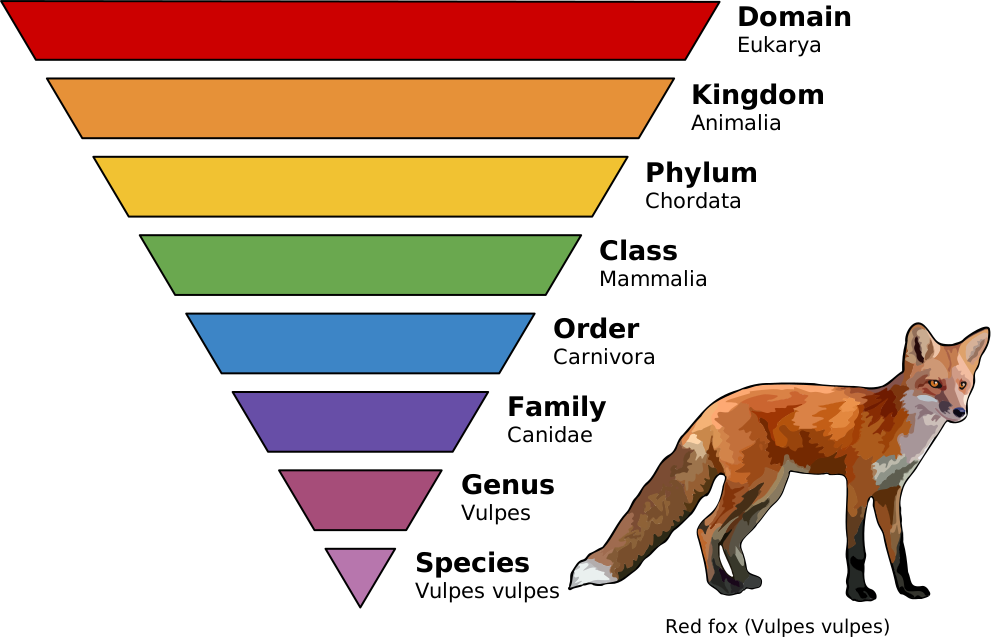
In biological taxonomy, a taxonomic rank denotes the level that a group of organisms—either taxon or clade—occupies in a hierarchical system of classification, which is usually but not necessarily based on evolutionary relationships between those organisms. Some authors prefer to use the term nomenclatural rank, contending that, according to some definitions, the hierarchical rank occupied by a group of organisms is more accurately described as concept of nomenclature rather than taxonomy. In general, the most inclusive taxa (or clades), such as the Eukarya and Animalia, are assigned the highest ranks in a particular system of taxonomy, whereas the least inclusive ones, such as Homo sapiens, Bufo bufo, Tyrannosaurus rex, and Vulpes vulpes, are given the lowest ranks.
From Wikipedia, under CC BY-SA. More on occurri.