Caesium standard
Primary frequency standard
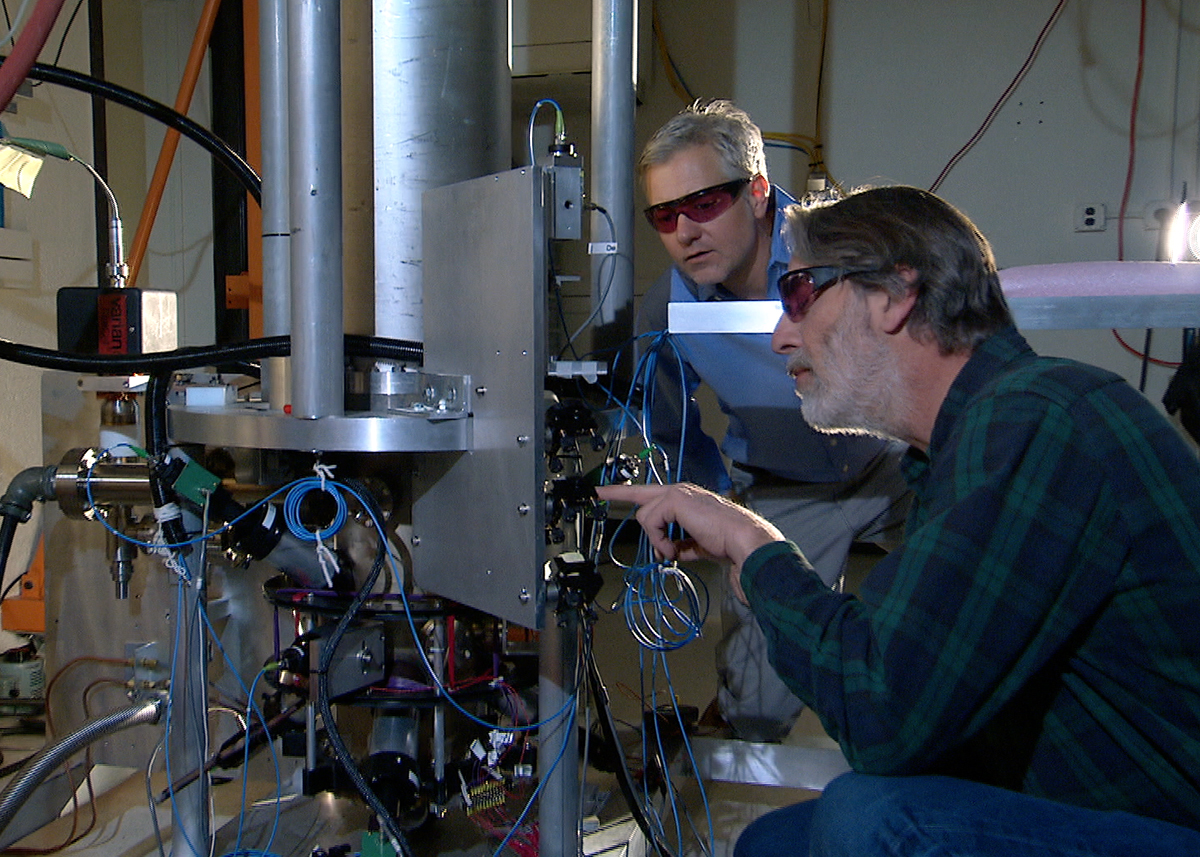
The caesium standard is a primary frequency standard in which the photon absorption by transitions between the two hyperfine ground states of caesium-133 atoms is used to control the output frequency. The first caesium clock was built by Louis Essen in 1955 at the National Physical Laboratory in the UK and promoted worldwide by Gernot M. R. Winkler of the United States Naval Observatory. Caesium atomic clocks are one of the most accurate time and frequency standards, and serve as the primary standard for the definition of the second in the International System of Units (SI), the modern metric system.
From Wikipedia, under CC BY-SA. More on occurri.